
Q1. Welcome to Just Fame! How are you doing?
Very well, thank you – I’m pleased to have reached the finish line!
The Brightest Lie has been a year in the making, so there’s a sense of relief that comes with finally being able to share it. That said, there’s always a touch of nervous energy when a book leaves your hands.
Q2. Please tell our readers about your new book.
The Brightest Lie is the sequel to The Shadows We Call Home and the conclusion to A Crow’s Chronicle. It picks up directly where the first book left off, with Mr. Crow once again finding himself in a surreal world populated by strange archetypes and symbolic characters. However, this is not the same world he visited before. Just as Mr. Crow has been changed by his previous journey, the world around him has changed too, presenting new challenges, new mysteries and new perspectives. Uncertain as to why he has returned, he sets out to uncover the reason for his presence there and, ultimately, find his way back home.
Q3. As this is the sequel to The Shadows We Call Home, how does The Brightest Lie continue or deepen the journey from the first book?
The Brightest Lie is a more ambitious book than its predecessor. The first was fairly linear in structure, whereas this one is broader in scope, despite still being a novella.
Where The Shadows We Call Home scattered its philosophical insights throughout the journey, The Brightest Lie builds steadily towards a climax where many of its answers are finally revealed. The first book was largely concerned with perception and understanding ourselves more clearly so that we might live more empowered lives. This one turns its gaze toward self-deception and those corners of the psyche we tend to perceive as adversaries. It’s a more human story, a grittier one, and ultimately a more honest one.

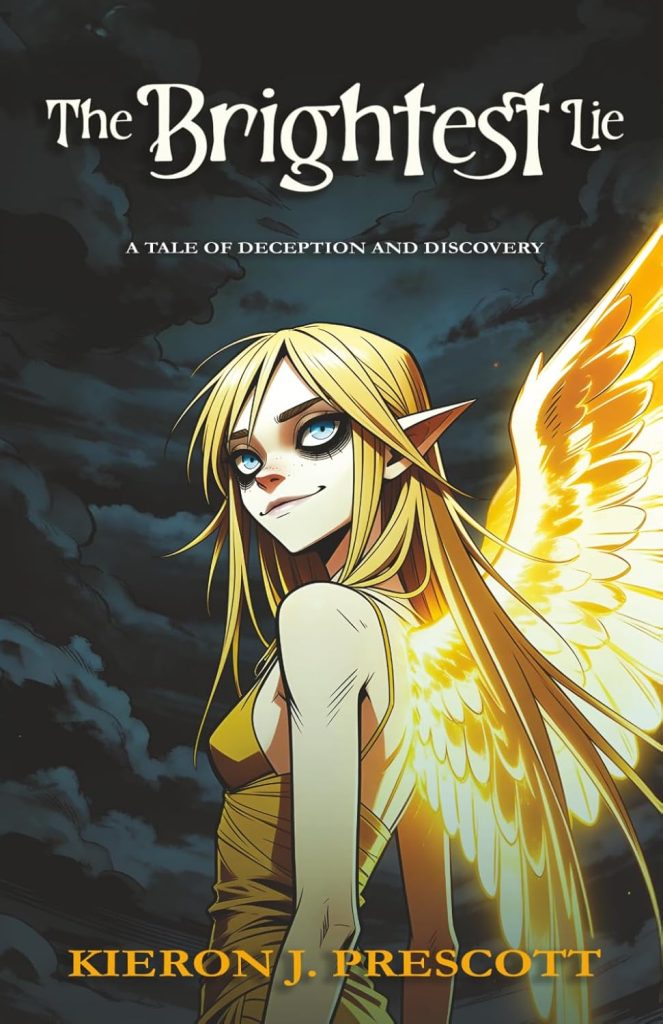
Q4. The title suggests that even something bright or beautiful can be deceptive. What does “The Brightest Lie” mean within the story?
A tricky one to answer without spoiling the book, so I’ll resist the temptation.
Let’s just say that the first book told a lie… and this one reveals what that lie was.
Q5. Your books blend fantasy with philosophical and psychological ideas. What themes were you most interested in exploring in this novel?
Across both books there are twelve central themes, represented by twelve archetypes, six in each book. Each character embodies a particular facet of the human psyche and a different way of thinking, feeling or interpreting the world. Rather than writing a straightforward self-help or philosophy book, I wanted to explore these ideas through personification, allowing Mr. Crow, and hopefully the reader, to engage with them through story rather than instruction.
Q6. Finally, as we ask all our guests, do you have any closing thoughts you’d like to share with the world and our readers?
We all see the world through a lens shaped by our experiences, beliefs and assumptions, and over time we can forget that we’re looking through a lens at all.
One of the ideas explored throughout A Crow’s Chronicle is that much of our suffering comes from becoming trapped inside our own perspective. We become attached to our stories, our identities and our interpretations of events, and mistake them for reality itself.
I think there is something freeing about stepping back and recognising that there are always other ways to view a situation. Life becomes less of a battle to defend a particular version of reality and more of an opportunity to experience it. If readers take anything away from these books, I hope it is the willingness to question their assumptions and remain open to perspectives they may never have considered before.
About the author: Kieron J. Prescott writes philosophical fiction that explores the shifting nature of thought, identity, and perception through simple, dreamlike storytelling. His work centres around A Crow’s Chronicle, a two-part series following the journey of Mr. Crow through surreal worlds that mirror the inner landscape of the mind, where the figures he encounters take the form of archetypes. Beginning with The Shadows We Call Home and concluding with The Brightest Lie, the series blends allegory, introspection, and darkly playful imagery to question what it really means to be “awake.” His writing aims to make complex ideas feel accessible without losing their depth — part story, part reflection, and part a quiet disruption of how we tend to see ourselves and the world.